top of page

Waymo
Rideshare users didn't trust the tech, and new markets saw Waymo as a "foreign invader" rather than a local service. Waymo had to find a way for consumers, and regulators, to emotionally connect with robots.
Team:
Brookelyn Shantler, Brand Strategy & Research
Elise Tannenbaum, Brand Strategy & Research
Libby Browder, Brand Strategy & Research
Me! Creative Strategy, Production & Execution

One thing to know
Revealed that fear of self-driving cars wasn't subsiding... it was intensifying, with 91% of drivers expressing either fear or uncertainty.
-AAA (2024)
While the team’s foundational research established a Trust Pyramid (empathy, logic, and authenticity), the brand needed a fresh idea to make that framework feel human and local.

01
News stories reveal that Waymo’s fleet had received 589 parking tickets in San Francisco.
-Washington Post (2025)
02
While others saw a PR liability, I saw 589 points of common ground.
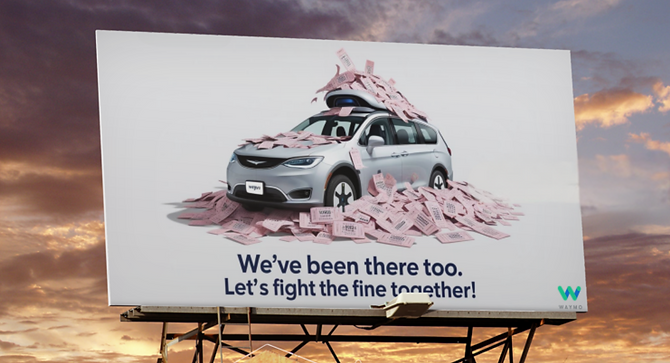


Campaign details
How Waymo found "Common Ground"
By acknowledging that our robots also struggle with the complexities of urban bureaucracy, we humanized the machine.
I led the development of a civic partnership model that launched a legal-aid fund for low-income residents, turning a shared pain point into a vehicle for city equity.
Hailed by the client as their "most distinctive and meaningful concept," the work proved that trust is won through shared human experience rather than technical specs.
bottom of page