
L'Oreal Paris
After 50 years as an icon of empowerment, "I’m Worth It" needed to move beyond the language of self-care and return to its radical roots as a boundary for a woman’s authority.
My job:
Executive Narrative Design
Cross-Functional Team Management
Product Strategy Innovation
Integrated Campaign Launch
Team:
Anna Monnett, Designer
Hannah Wente, Copywriting
Lorna Graham, Art Direction
One thing to know
A woman’s career is often the only thing truly her own, yet she is still expected to perform a level of invisible labor her male colleagues are not.
While the beauty industry has relegated femininity to pampering, it is time for L'Oréal to trade quiet self-worth for workplace power.
We moved the brand from a reward for hard work to a requirement for respect, reclaiming the credit women are historically denied.

01
While "I’m Worth It" has 80% global recognition, women are still 1.6x more likely to be mentally overloaded by the labor of organizing the world around them.
-CIOInsights (2025)
02
The workplace remains an uneven playing field; 37% of women have experienced a man taking credit for their work, forcing them to spend creative energy just to be seen.---McKinsey (2023)
Integrated campaign
The Beauty of Bragging
We started off by reclaiming the world’s most iconic structures, drenching them in L’Oréal Red to honor the women who made them possible in a way that no one can ignore.
To credit Sophie Germain, the mathematician whose elasticity theory made the tower's iron construction possible, yet whose name was excluded from the 72 scientists honored on
its beams. Inspired by Jenny Holzer's art.
To honor Emily Roebling, the field engineer who managed the project for a decade after the chief engineer fell ill, only to be left off the official opening plaques.

We followed the architectural stunts with full-page spreads in The New York Times and Le Monde, transitioning from a visual spectacle to a global manifesto for
The Beauty of Bragging.

L'Oreal Paris will use their ad space to highlight more iconic women that have not been given credit.
Thelma Schoonmaker didn't "help" Scorsese. She created the vision of modern cinema through three decades of unparalleled film editing.

L'Oreal Paris will use their ad space to highlight more iconic women that have not been given credit.
Pussycat Doll and X Factor judge Nicole Scherzinger formed the group One Direction, only for Simon Cowell to take public credit for
their success.
.png)
.png)
.png)

We knew women wanted to celebrate their wins, but the stigma around "bragging" made it feel impossible. We found that while women hesitate to claim their own space, they are the first to shout out others. By modeling this behavior through world-class icons, we gave women the social permission to own their own stories.
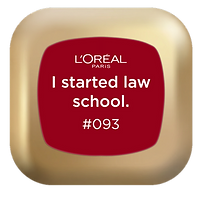
To bridge that gap, we used our platform to model the behavior first. By showing them world-class women bragging first, we empowered women to own their own stories. Only once we normalized the "brag" did we invite them to engrave their own milestones—big or small—onto a custom L’Oréal lipstick, turning a product into a permanent record of their own accomplishments.
.png)
Large-scale digital installations in New York and Paris that updated in real-time with wins submitted by women everywhere. By putting our names in the center of the world's busiest squares, we created a public record that can’t be edited out.
The “Beauty of Bragging” comms plan transforms L’Oréal from a provider of self-care into an advocate for female bragging, reframing its iconic heritage as a radical tool for recognition.
By shifting the focus from internal validation to external ownership, we position L’Oréal as the essential architect of a world where a woman’s work is never erased.
Because being worth it was always about being recognized.

Reclaiming the iconic
You don’t fix invisible labor by staying modest. You fix it by being impossible to ignore.
I authored the strategy and wrote the campaign narrative to move L’Oréal beyond the "polite" language of self-worth. We repositioned the brand to demand a world where women are defined by their ownership, credit, and power rather than just their representation.
To turn lipsticks into physical proof, I developed a strategy centered on a custom engraving service allowed women to rename their shades after their own milestones.